After a weekend’s break to allow my weakened ankle time to heal, yesterday saw my sons and I return to the trail in order to continue our Walking the Wall for Daina challenge. We left behind a grey and cloudy Newcastle by train to arrive in a sunny Hexham some thirty minutes later. Hexham is itself a picturesque and historic market town, with its Benedictine Abbey, one of the cornerstones of early Christianity in Northumberland. We had no time to linger, however, as the one daily bus which could transport us to Portgate (and the start of our walk) left just after 10am.
A Frontier Landscape
I was so grateful for this bus, as we drove up the steep slopes of the hills north of Hexham which would take us back into Wall country. Having to make the hike up there ourselves would have severely impeded our progress! The walking was relatively easy along this section; the skies open and bright. Everywhere, we witnessed signs of the approaching spring: the sun, once risen, was much warmer than the low sun of January had been. Snowdrops were flowering in the woodlands. We were even able to remove our winter jackets for a while! The views to the north were expansive, taking in the Northumbrian wilds and the Scottish Borders. I couldn’t help but think that, in building the Wall, the Romans had cut themselves off from some of the finest parts of the land. No doubt the native Celtic tribes were happy to be left to continue their uncivilised ways, north of the frontier!
Glimpses of Wall along the trail
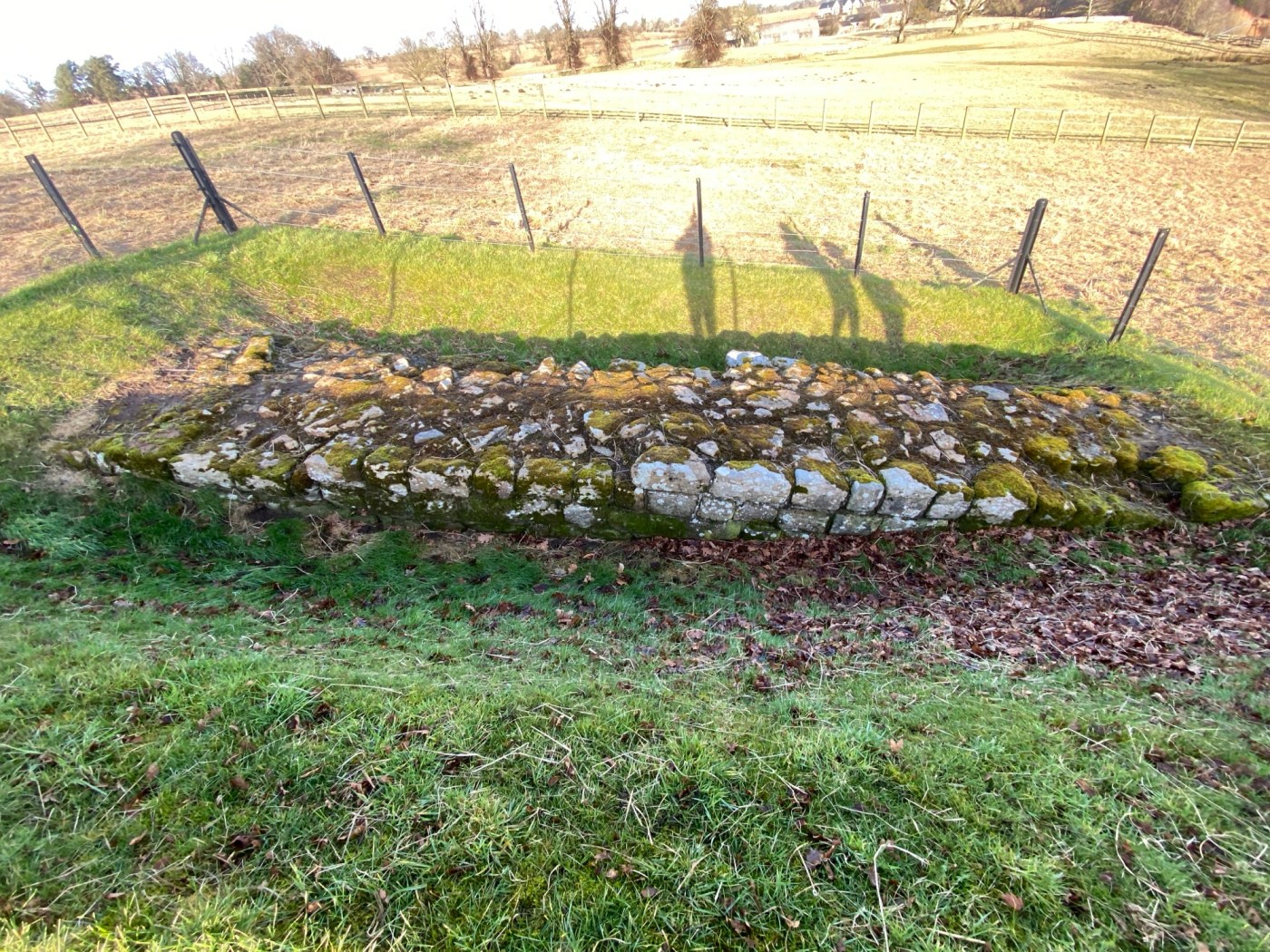
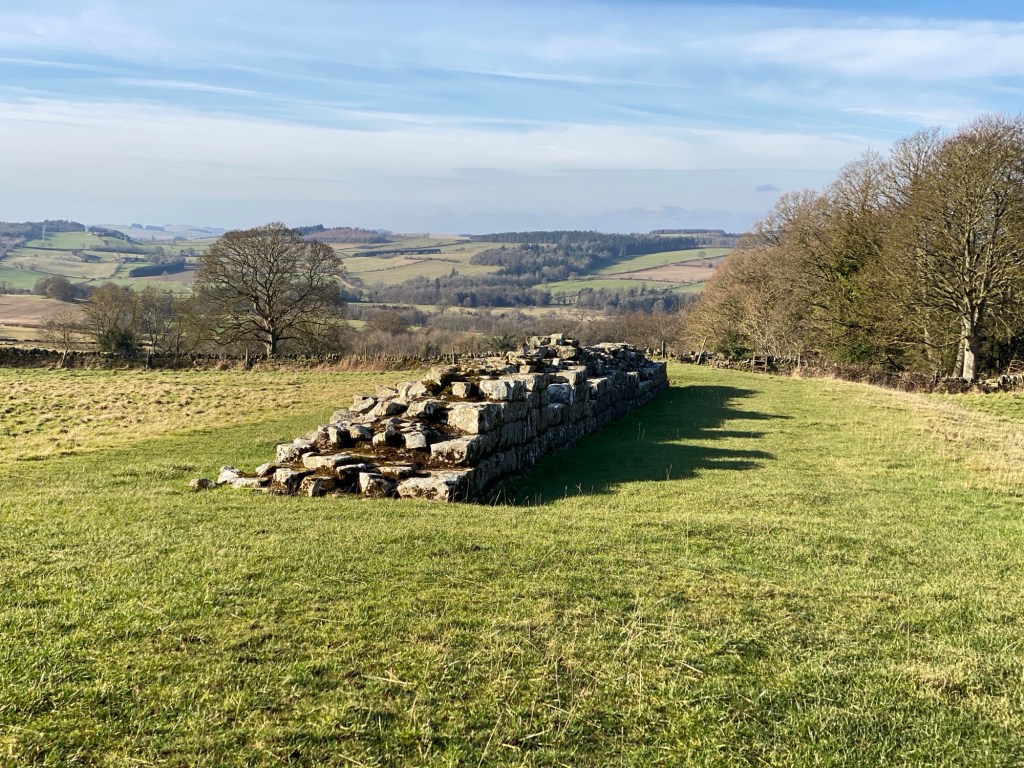
Our first glimpse of surviving (reconstructed) Roman Wall was at Planetrees, whose miraculous survival (at a time when the stones were being plundered to build nearby farmhouses and churches) enables us to see the exact spot where the Broad Wall was narrowed, and continued along a narrower design, to its western limit. See previous post to learn more about this. Though our route passed Brunton Turret (with an intact stretch of Wall) and the original Roman bridge abutment at Chollerford, time being of the essence, we pressed on to Chesters (Cilurnum) Roman Fort to ensure we had time to explore this extensive site.
About Cilurnum
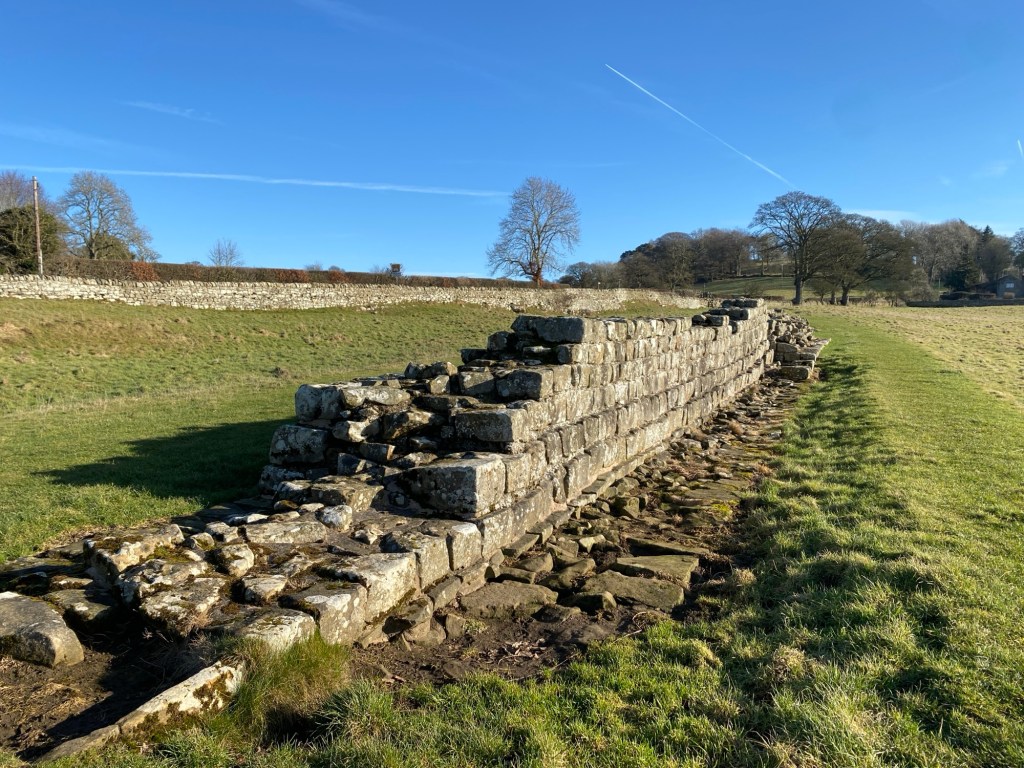
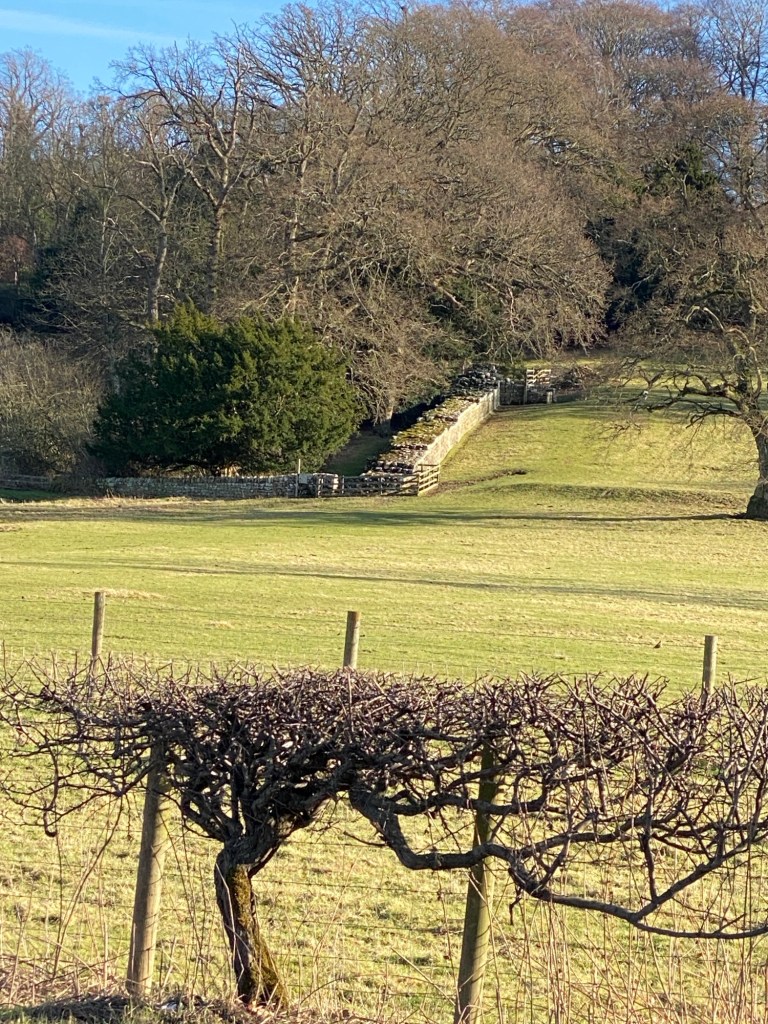
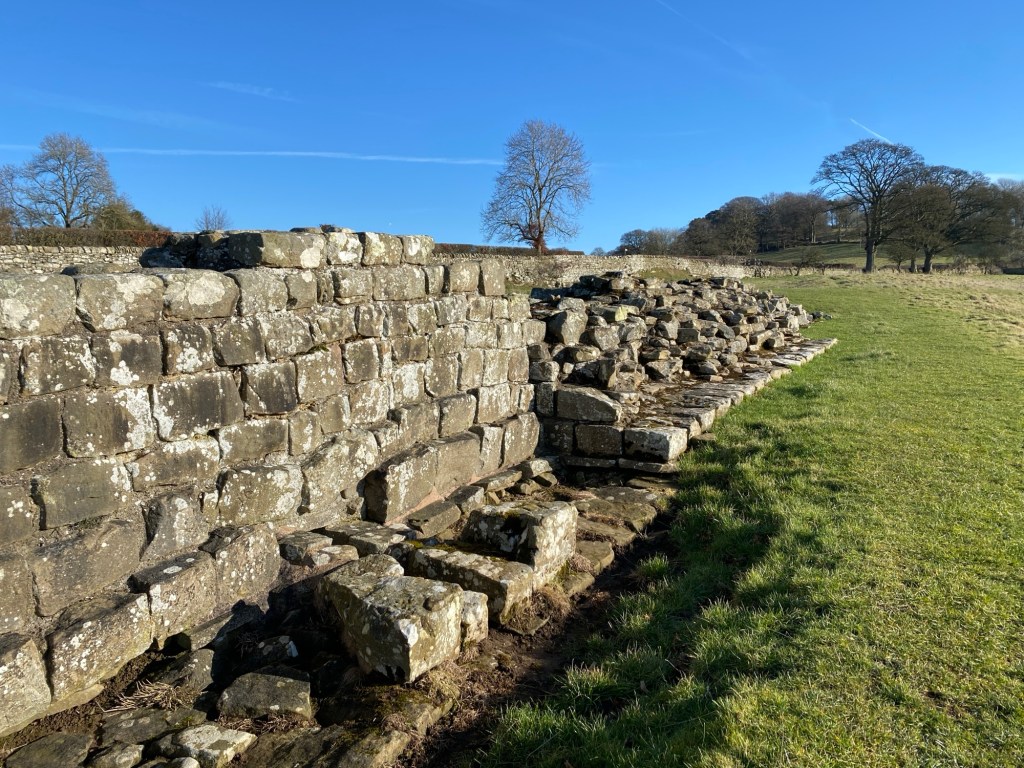
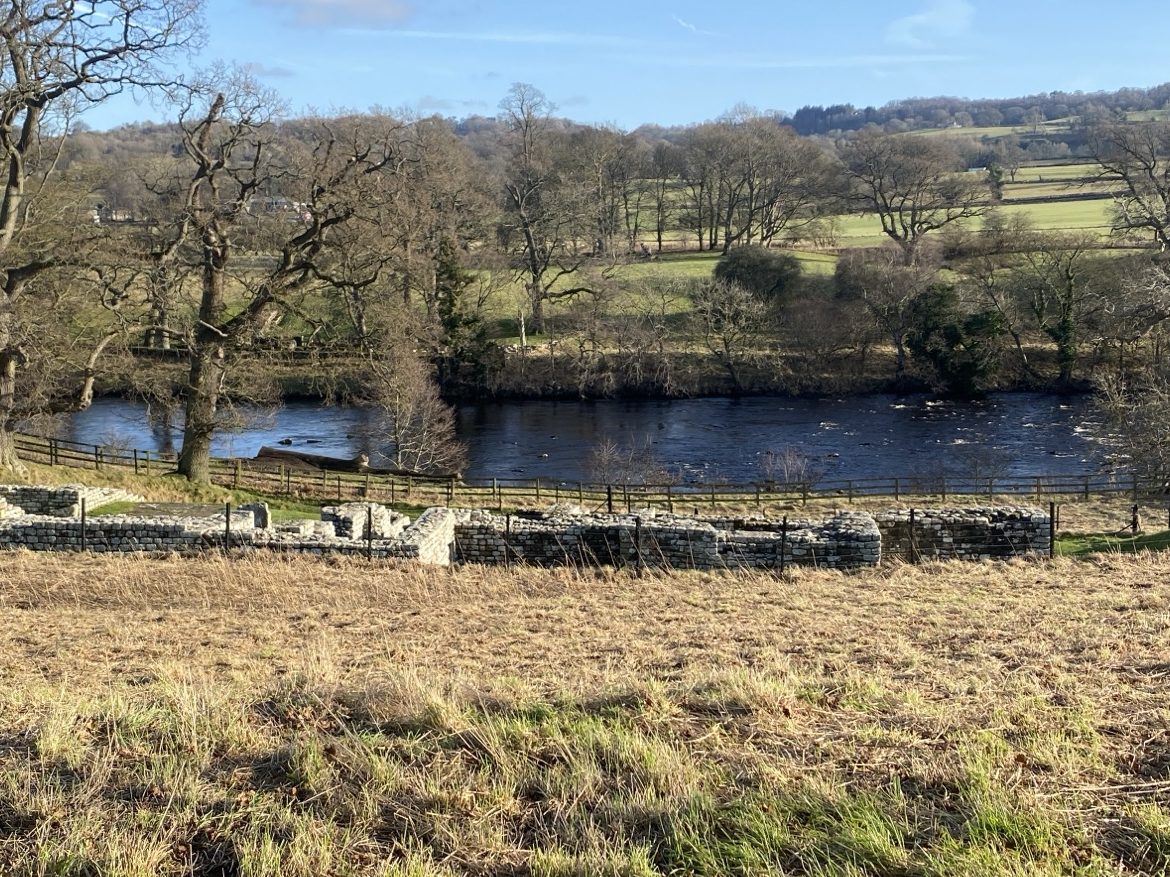
The fort of Cilurnum (what is now Chesters) served as a cavalry garrison at this important river crossing, once bridged by an impressive Roman structure (built by Septimius Severus in 208 A.D.) which carried the Roman military way and was adorned with a parapet, columns and altars. Of this, only the abutment on the far shore remains (see photo below).
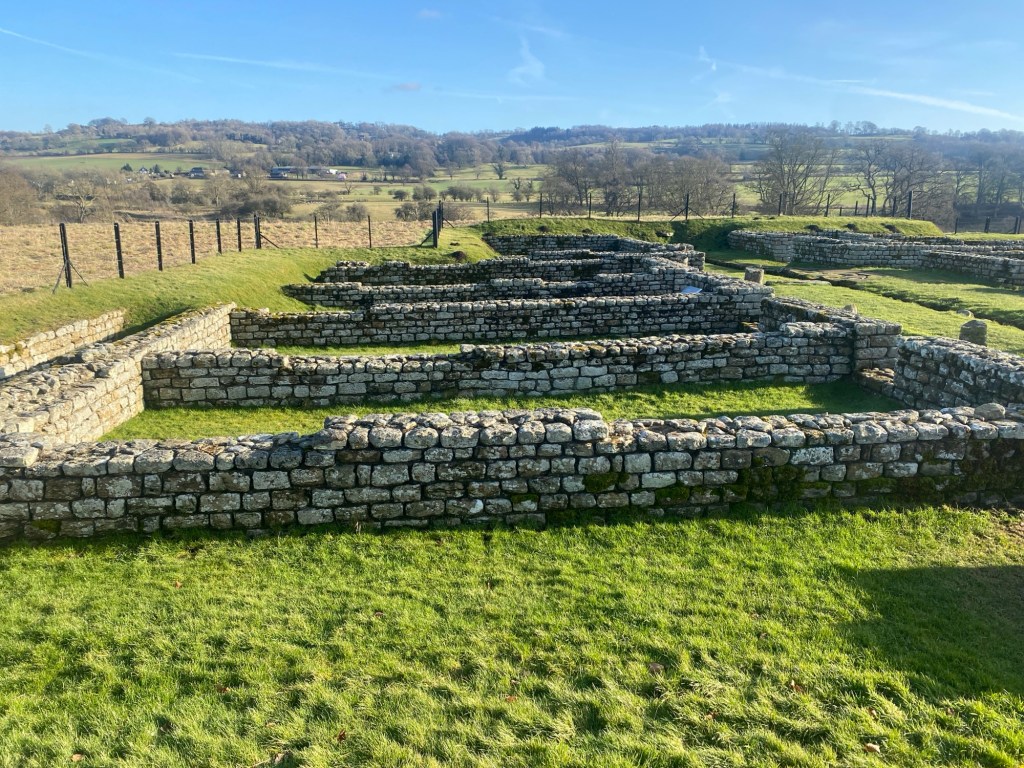
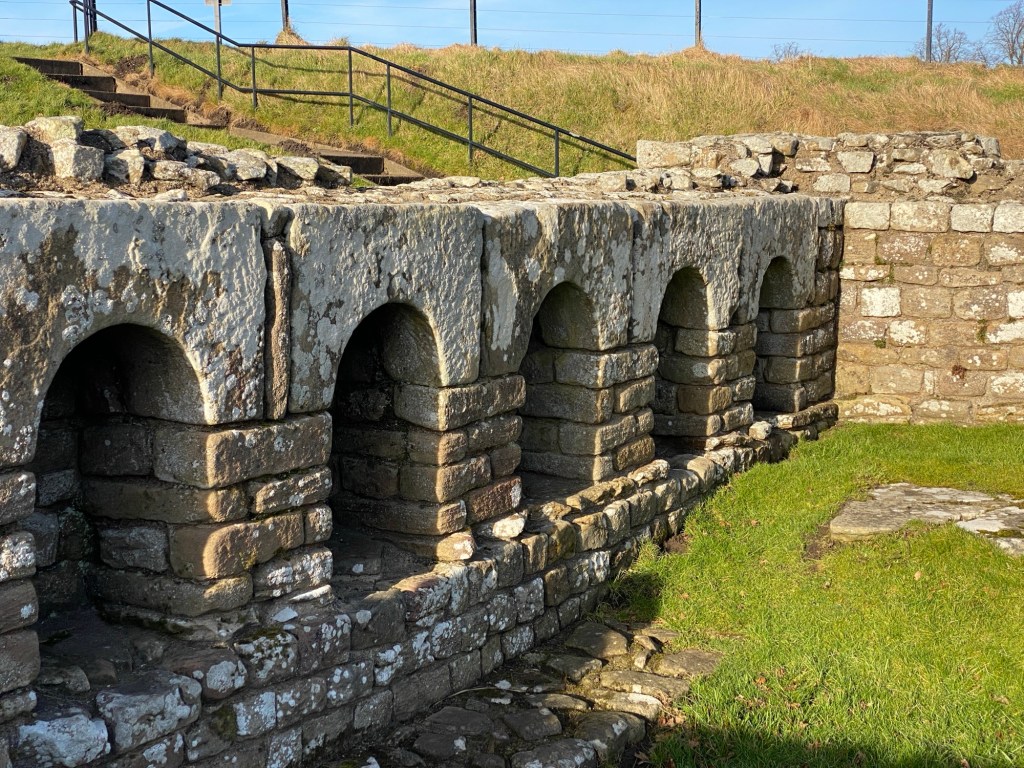
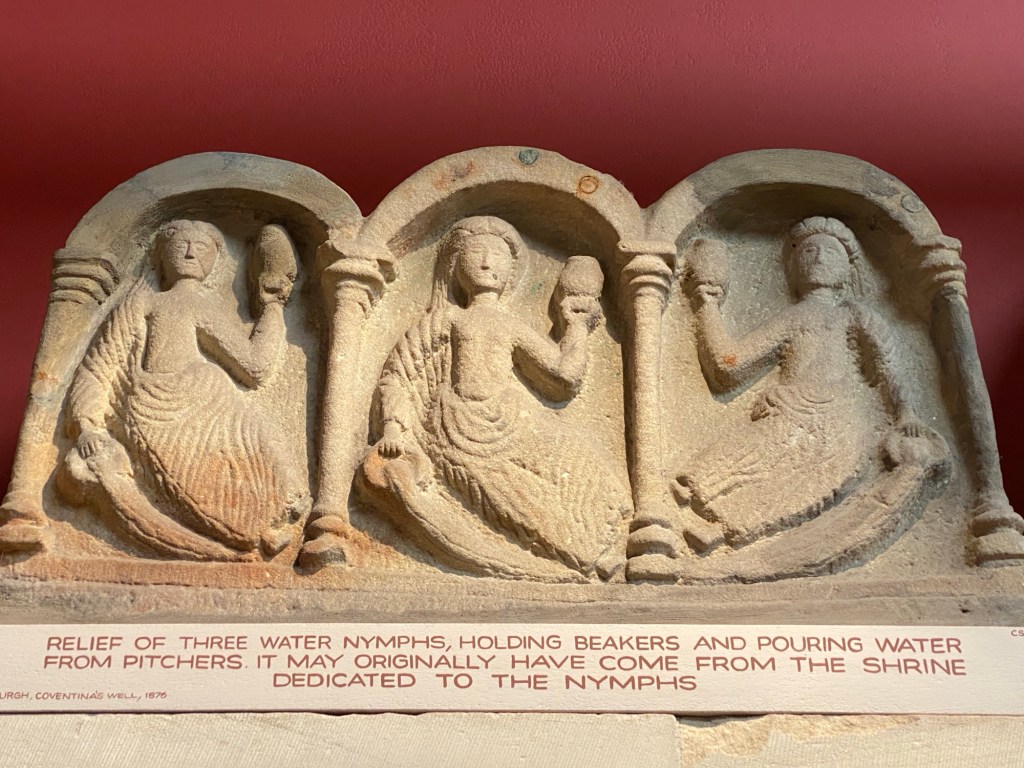
The site was uncovered by 19th-century antiquarian John Clayton, who did much to preserve the artefacts he found during his excavations, and many of the surviving sections of Wall we see today. Although much remains underground, an entrance ticket to the site enables you to visit the impressive barracks, bath house and commandant’s quarters, along with the extensive fortifications. Also included is the fascinating museum housing many of Clayton’s discoveries: here are numerous altar stones, sculptures and pottery fragments. Well worth a visit if you are ever in the area!
From here, we caught the A.D.122 bus (which serves Wall walkers all year round) back to Hexham, and the train home.

Stage 5: Portgate to Chesters
Distance: 6.24 miles
Elevation gain: 300 ft
Time: 2 hours, 33 minutes
Total Distance: 40 miles
Almost half way!
I am amazed that we are almost half way through our challenge already, and delighted that we have already raised over £100 in donations for the North and West Cumbria branch of the MND Association, which helped my aunt Daina so much during her life with MND. You can visit my fundraising page at Justiving.com to find out more.
Ingrid


Good luck with the rest of the walk. It looks like a fascinating hike. Hope the weather stays fine and dry for you.
LikeLike
Thank you kindly 🙏
LikeLike
Those ruins are so fascinating, and the countryside is beautiful. I hope your ankle is better now. You’re making great progress!
LikeLike
Thank you, Merril – it hurts whenever I do a long walk, so I need to rest in between!
LikeLike
You’re welcome, Ingrid. Take care!
LikeLike
Fascinating. All of it, Ingrid. Great accomplishment 🫡 good job. All the best for the second half. I see you’ve already met signs of spring. More to come. All the best. 🤗
LikeLike
Thank you, Selma, I’m glad you enjoyed this!
LikeLike
Thank you for sharing the wonderful photographs and providing some history! (I’ve always been fascinated by ancient Rome; I’m not sure why.)
LikeLike
My pleasure, Liz! Wherever I’ve travelled in Europe, I’ve found traces of the Roman Empire. It is fascinating.
LikeLike
I look forward to learning more!
LikeLike
Beautiful photos, Ingrid. I enjoyed reading about historical aspects of your journey! 🩷
LikeLike
I’m glad you enjoyed this, Cheryl – thanks for visiting!
LikeLike
That landscape is so inviting, and thanks for the context. (K)
LikeLike
My pleasure, Kerfe, thank you.
LikeLike
Glad to read that you are back at it, Ingrid. It is truly incredible to see what has survived through the years. Thank you for sharing! 🌼
LikeLike
My pleasure, Michele, as always!
LikeLike
This series truly honors your aunt, Ingrid.
LikeLiked by 1 person
Thank you, Barb!
LikeLike
You’re welcome, Ingrid!
LikeLiked by 1 person