Easter Monday, 2026 and my middle son, new baby and I set off on a pilgrimage. St Oswald’s Way runs 100 miles from Heavenfield on Hadrian’s Wall to Berwick-upon-Tweed on Northumberland’s Scottish border. A much less well-known National Trail than the Hadrian’s Wall path, which we walked last year, it has been calling out to me for that very reason: the lure of uncharted (for me, at least) territory. The high, lonely places, moorland and forest with only wild birds and deer for company. In its later stages, the path joins up with the Northumberland Coastal Path, part of the new King Charles III England Coastal Path which traces the entire coastline of England for some 2700 miles. One day, I hope to complete it all. But for now, it is enough just to explore some new places at a leisurely pace. As I will be carrying baby, our pilgrim’s progress will be slow, and for this reason, I won’t be raising money for charity, as I don’t suppose the walk seems impressive by modern fundraising standards. Instead, this will be a pilgrimage of exploration, inspiration and quiet reflection.
About St Oswald’s Way
St Oswald’s Way traces the roots of Christianity in Northumberland, starting at the site of the Battle of Heavenfield, in which King Oswald of Bernicia (later St Oswald) defeated the Welsh forces of Cadwallon of Gwynedd. After the battle, Oswald joined the kingdoms of Bernicia and Deira as Northumbria, the strongest kingdom in the North of England at that time (around 634 AD). He encouraged the ministry of St Aidan, who brought Christianity to Northumbria via Lindisfarne, and whose banner was later taken up by St Cuthbert, St Bede and Benedict Biscop, those revered early fathers of the English church. The route begins at the battle site and follows the Roman Wall for several miles before turning North towards Rothbury, then East towards the coast, taking in the Holy Island of Lindisfarne and the ancient Northumbrian capital of Bamburgh.
The Walk
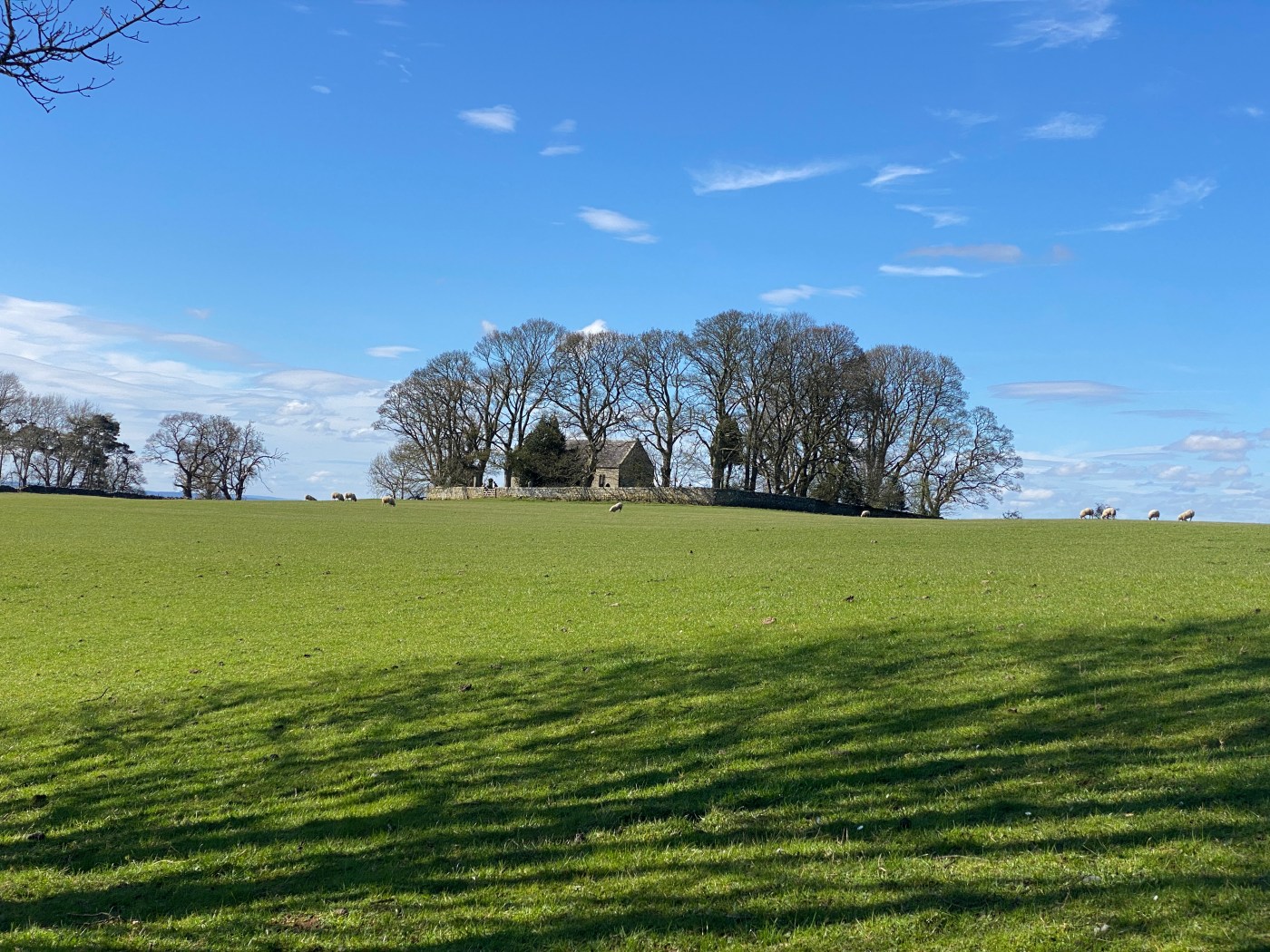
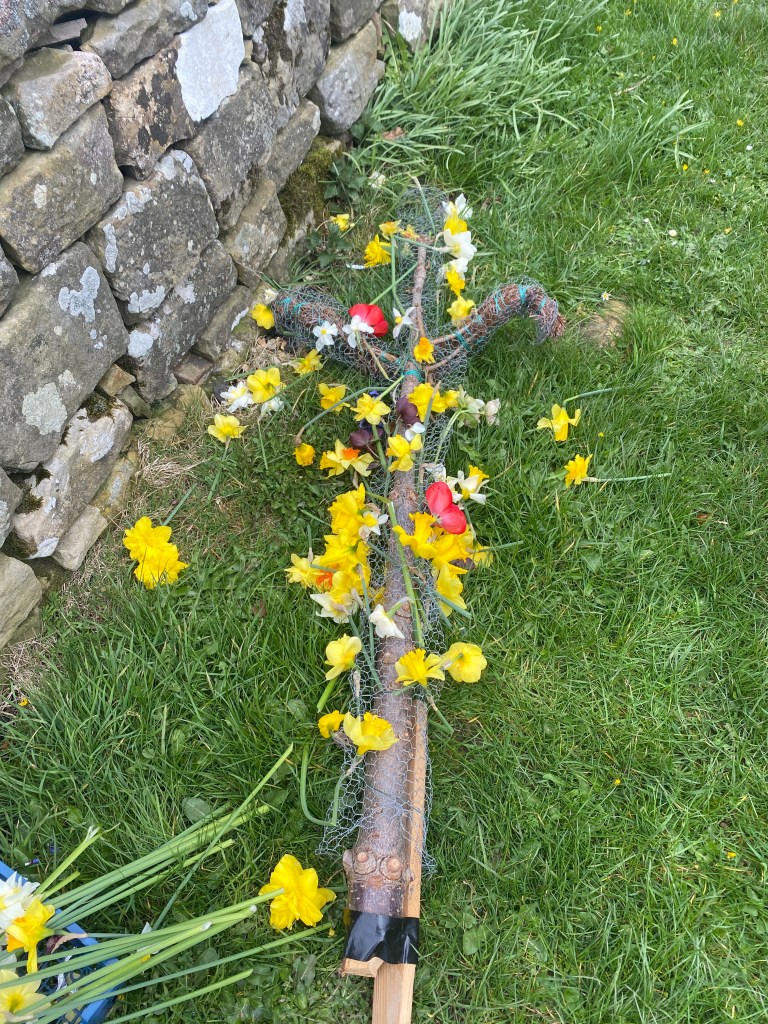
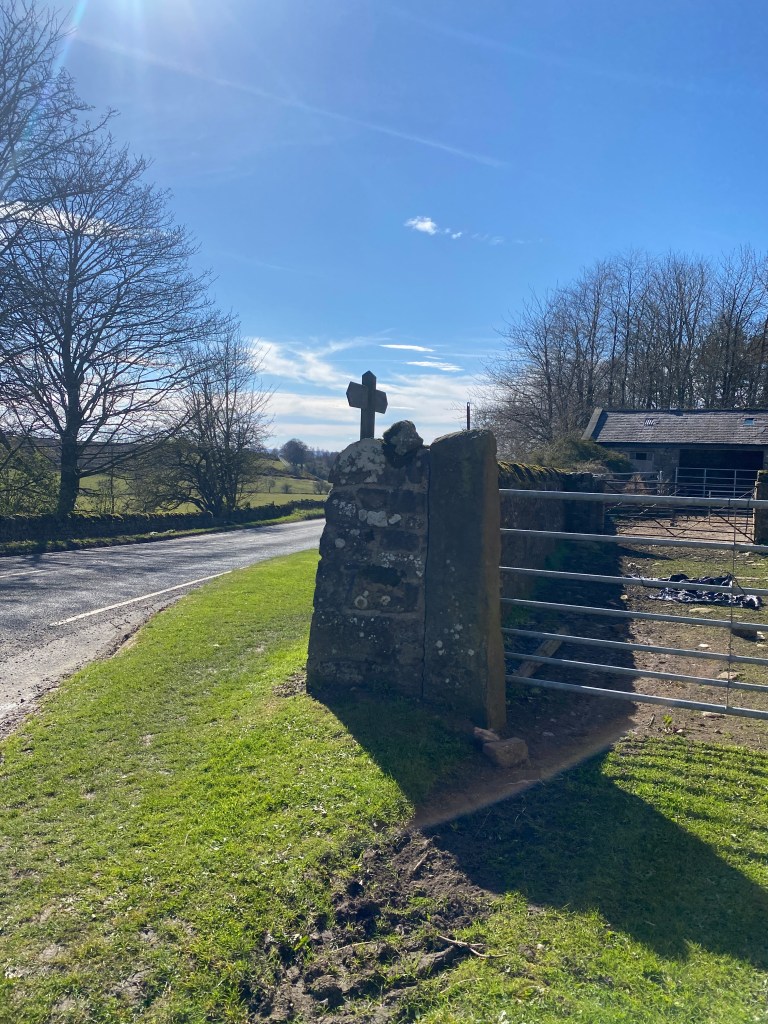
This route retraced, in reverse, a section of our Hadrian’s Wall walk, from Portgate to Chesters. The starting point of the trail is the wooden cross at Heavenfield: legend has it that King Oswald erected a wooden cross at the site before going into battle, though I doubt this is the original cross! It seemed appropriate to pay a visit to St Oswald’s Church (pictured) before starting the walk. Upon entering, a sign on the inner door informed us ‘this church is always open,’ though this statement was somewhat belied by the fact that the door was locked. Nevertheless, the churchyard itself was picturesque and well worth a visit, with a sign pointing out distant landmarks such as Kielder Water, Cheviot and Simonside fells (the latter of which we will pass by later on in our pilgrimage). Another wooden cross, adorned with daffodils, was laid on the ground close to the wall of the churchyard, presumably carried there in ceremony on the preceding Good Friday.
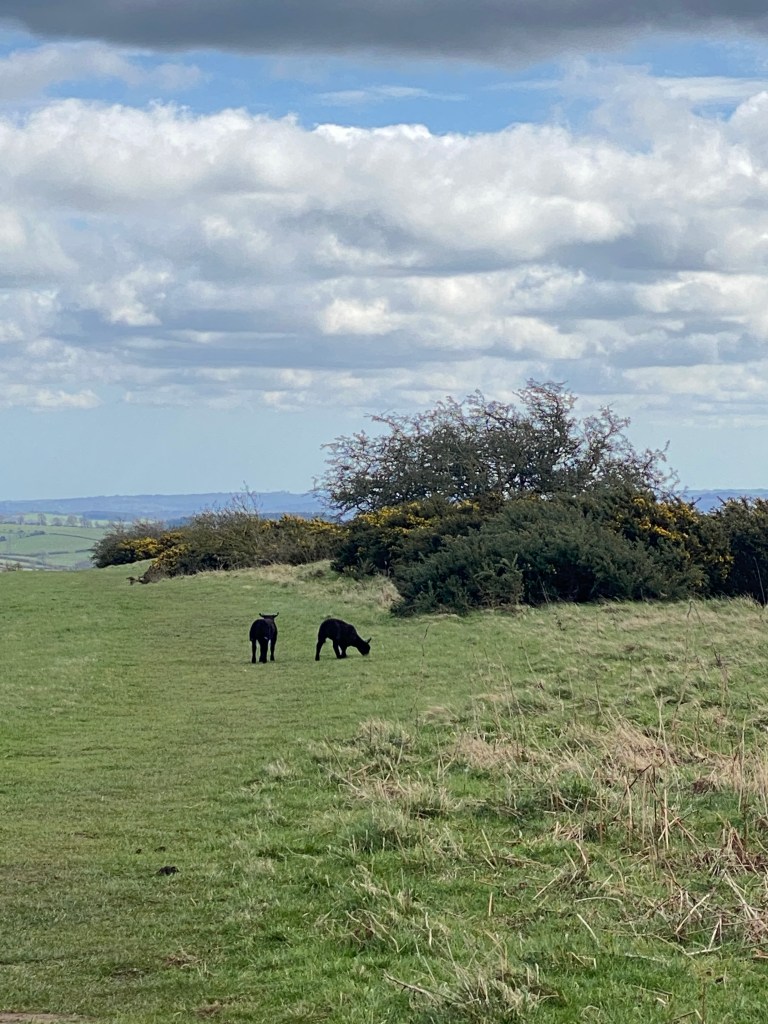
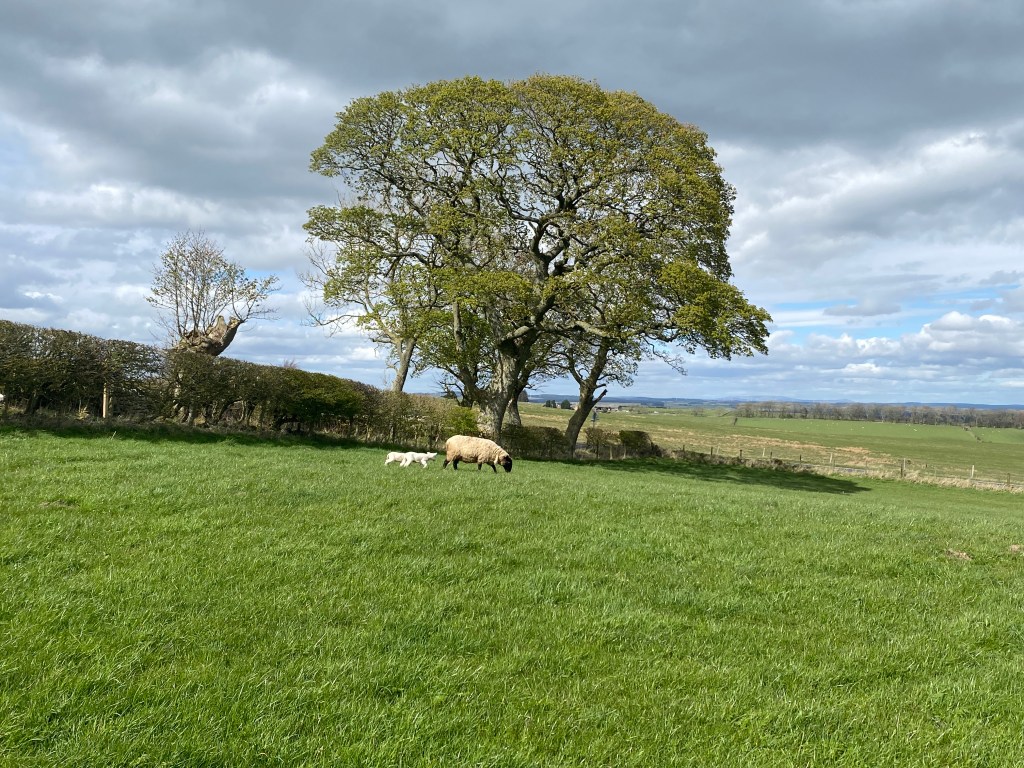
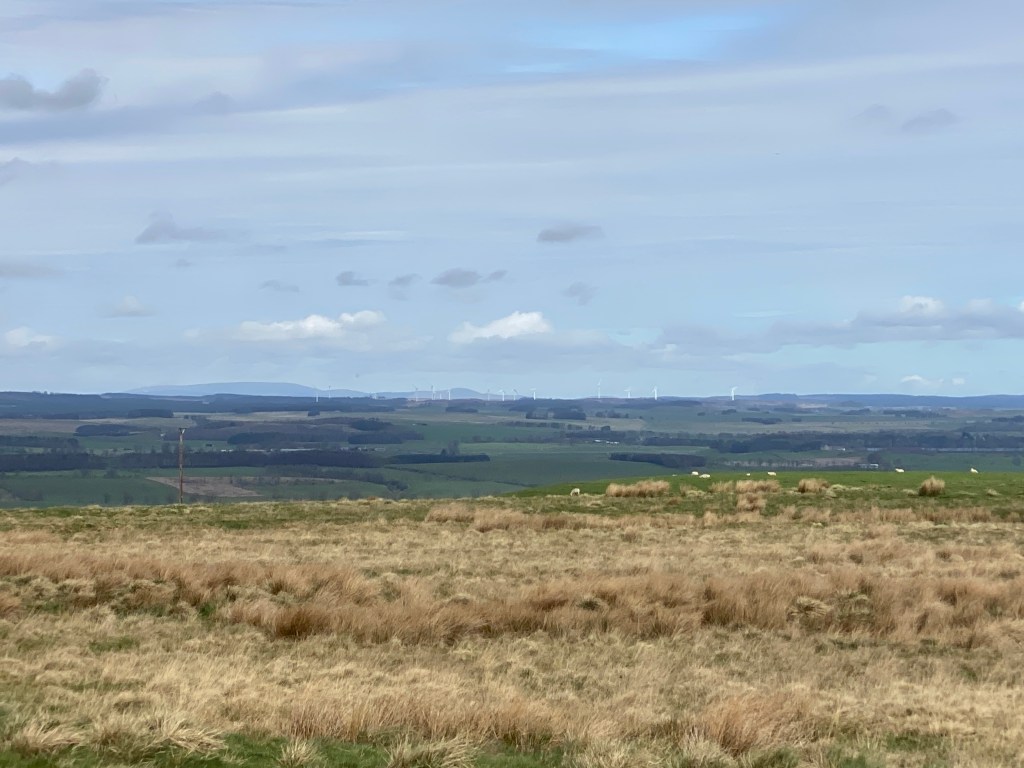
As we followed the route of Hadrian’s Wall east towards Portgate, I soon began to realise that our progress was to be painfully slow: although he only weighs around 10lb at the moment, baby in his carrier put quite a strain on my back, which is already prone to aches at the slightest misalignment. Be that as it may, the walk was glorious in the spring sunlight, lambs gambolling in the surrounding fields, gorse adorning the Roman Vallum, and daffodils blooming next to every wall and hedgerow. It took around 90 minutes to walk the 3.5 miles to Portgate, where of course we stopped for tea and cake at The Errington Coffee House—highly recommended. Then it was a further 90 minute trudge back to the car: the unfortunate lack of public transport on this route means we will be retracing our steps at every stage, thus doubling the length of our pilgrimage! It was, however, a fine day to be walking the earth: we even spotted a red kite on the return journey, which was a highlight! Baby, of course, slept blissfully through it all…


See you next time!
Ingrid
 Experiments in Fiction
Leave a comment